
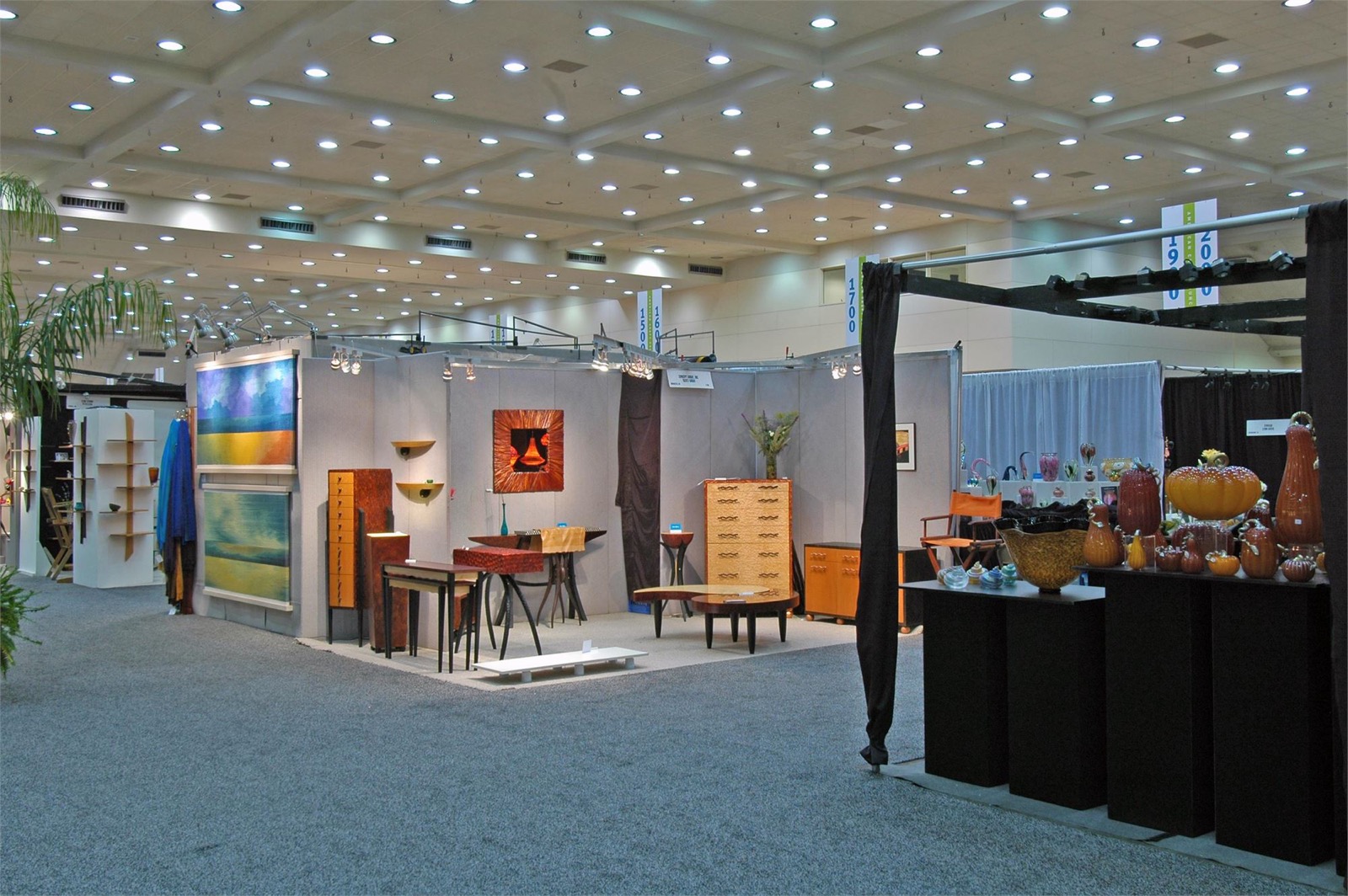
Exhibit graphics and large-format printing in Jacksonville should read like file discipline, substrate decisions, and install sequencing, not like an AV section with the labels swapped out for the printing.
This scope exists because the visual layer only works when scale, finish, mounting method, and message hierarchy are all resolved before anything hits the printer or the wall for the printing.
For the printing, the real question is whether the files, surfaces, and install plan can arrive at Deerwood Country Club ready to land cleanly on the booth they were designed for the printing.
Exhibit Graphics and Large-Format Printing operating notes
- Lock file ownership, proofing, material choice, and install sequence before the visual package turns into a last-minute print scramble for Exhibit Graphics and Large-Format Printing.
- Treat the graphics package as a physical build layer with real tolerances, not as a concept board that can stay abstract until show week for Exhibit Graphics and Large-Format Printing.
- Use the Jacksonville print plan to connect product launch environments with structure dimensions, crate logic, and actual wall or panel conditions for Exhibit Graphics and Large-Format Printing.
- Make the message hierarchy survive scale, finish, and viewing distance instead of assuming the art file will do the job alone for Exhibit Graphics and Large-Format Printing.
The Jacksonville event landscape
Jacksonville is a working trade show market.
Scope gets tighter; standards don't.
Jacksonville venues we work
the plan has to match the specific building.
Ramada Hotel & Conference Center by Wyndham Jacksonville /Mandarin is one of the anchors.
How we're built to run your project
Working with a Jacksonville-based shop matters most when something goes wrong on-site. Solutions live within driving distance instead of on another coast.
Over a multi-show calendar, the compound value of a single team shows up in fewer surprises. The second install is faster than the first, the third is faster than the second, and by the fourth the project runs on memory and documentation rather than first-principles planning.
Operational rules on the Jacksonville floor
The workable version of Jacksonville labor planning is boring on purpose: read the manual, match the scope to its categories, order what the venue sells directly, and schedule everything else around its posted windows. Surprises almost always trace back to a step someone skipped.
Jacksonville should be treated as a mixed/open-market labor environment with venue-specific, organizer-specific, and scope-specific exceptions. Prime Osborn clearly publishes some house and union technical constraints, while many hotels and off-site venues rely on venue coordination and outside supplier networks without publishing one universal labor model for the whole city.
The main Jacksonville event areas
Jacksonville Beach, Neptune Beach, Atlantic Beach, Mayport form the Beaches and Coastal Strip cluster. The coastal strip is relevant for hospitality-heavy programs, off-site sponsor events, beachside meetings, and executive gatherings that pair conference work with the Atlantic shoreline.
Northside and Airport Access Belt runs across Northside, Jacksonville International Airport, Oceanway. The airport corridor supports fly-in meetings, transportation-efficient exhibitor teams, and overflow programs that need fast access to I-95 and Jacksonville International Airport.
Line items on a typical project
The printing projects typically include design work, fabrication or rental sourcing, graphics production, show-service paperwork, freight, install, show-hours coverage, and strike.
The handoffs on an the printing project matter almost as much as the line items. Design has to hand a build-ready drawing to fabrication. Every handoff is a place quality can drop.
Those run alongside the engagement rather than inside it.
What an engagement actually looks like
After the brief, the work turns to the building itself.
With venue details locked, production runs.
One named show-site lead runs the install.
Throughout show hours, the on-site lead stays present.
What it costs and how fast it moves
Every project has the same cost drivers.
Rental programs run on 8 to 12.
What a successful project looks like
Exhibitors who measure programs seriously track leads, floor-booked meetings, and post-show pipeline. The build and the install are upstream inputs to those KPIs.
The post-show debrief is where the numbers get connected back to the physical booth. Which demo station drew traffic, which meeting area closed more conversations, which graphic zone attracted dwell time — that feedback shapes the next build rather than getting lost.
FAQ
Do you work at Jacksonville Beach Community Center & Exhibition Hall?
Yes. Jacksonville Beach Community Center & Exhibition Hall is a conference center serving the Jacksonville Beach corridor of Jacksonville Beach.
How does labor work in Jacksonville?
It runs venue by venue.
How much lead time is ideal?
Custom builds run best with 16 to 20 weeks of lead time. Rentals take 8 to 12 weeks.
What information kicks off a project?
The show, the venue, the booth number, the dates, and a target budget range. From those, an initial scope and a realistic cost come back within a few days.
Who runs the booth on-site?
One named show-site lead runs the install, the show hours, and the strike. That person carries the floor plan and the punch list from crates to doors and reports up once a day.
Can the booth travel to the next city on our calendar?
Same structure, swappable graphics, standard crates.
What happens if something breaks during show hours?
The on-site lead handles it.