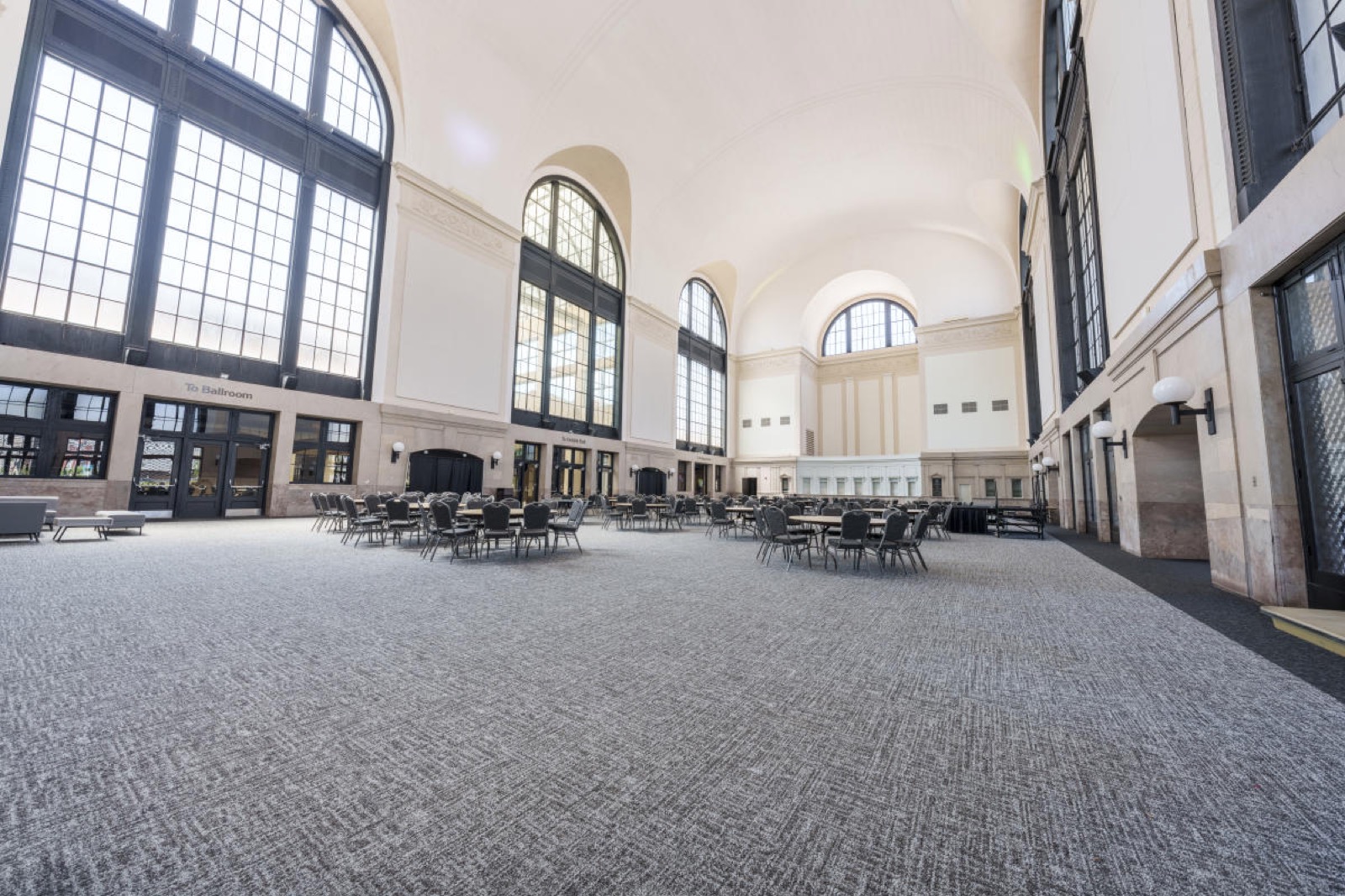
Jacksonville Center for the Performing Arts should be framed as a performance-led civic venue choice where the room is primarily about staged audience experience, not about serving as a headquarters hotel.
The center for the Performing Arts is part of Jacksonville's Downtown Riverfront event mix and should be planned around the real room configuration, access pattern, and show manual in play for the date. The value is in the presentation setting, audience focus, and civic event feel rather than in sleeping rooms or all-day hotel operations for the center for the Performing Arts.
For the center for the Performing Arts, the planning question is whether the event is really driven by stage experience and audience presentation rather than by hotel-based conference logistics.
Jacksonville Center for the Performing Arts access notes
- For the Performing Arts should be judged on stage experience, audience sightlines, and how well the event fits a performance-oriented civic room.
- Start with presentation format, audience seating, and whether the program is supposed to feel more like a staged event than a hotel meeting for Jacksonville Center for the Performing Arts.
- Use this venue when the room itself is the showpiece and the event does not need a headquarters-hotel operating model for Jacksonville Center for the Performing Arts.
- For the Performing Arts is a center for professional and community artistry in Downtown Jacksonville.
Working at Jacksonville Center for the Performing Arts
Jacksonville Center for the Performing Arts is one of the venues we work on regularly in Jacksonville.
Located at 300 Water Street, Downtown Riverfront.
Projects at the center for the Performing Arts start with its published floor plan, dock schedule, and service-order deadlines.
Jacksonville trade show market
Trade shows in Jacksonville move fast.
Scope gets tighter; standards don't.
the Adam W.
The advantage of a local Jacksonville team
Local fabrication means real-time problem-solving. A graphic that needs to be reprinted at 6 a.m.
Clients who run repeat programs across multiple dates end up paying less per event when the same team handles everything. Less re-briefing, less re-training, less re-checking — the operational overhead drops year over year.
Who handles what during the Jacksonville install window
The workable version of Jacksonville labor planning is boring on purpose: read the manual, match the scope to its categories, order what the venue sells directly, and schedule everything else around its posted windows. Surprises almost always trace back to a step someone skipped.
It has a collective bargaining agreement with IATSE Local Union 115 for exclusive technical-services personnel on rigging in ballrooms and exhibit halls and for larger AV setups. That is a clear example of why Jacksonville labor copy must stay venue-specific rather than making blanket market claims.
Line items on a typical project
Projects at the center for the Performing Arts typically include design work, fabrication or rental sourcing, graphics production, show-service paperwork, freight, install, show-hours coverage, and strike.
Individual projects layer or remove items based on scope.
The handoffs on a project at the center for the Performing Arts matter almost as much as the line items. Design has to hand a build-ready drawing to fabrication. Every handoff is a place quality can drop.
Those run alongside the engagement rather than inside it.
From first call to strike
Once scope is clear, the venue work begins.
One named show-site lead runs the install.
That document drives the next booking.
Budget and timeline
Cost scales with how it is built, how big it is, what the venue charges for its own services, what the graphics look like, how far the crates travel, and how many days the team stays on-site.
Rental programs run on 8 to 12.
What a successful project looks like
Trade show ROI is measured at the lead and pipeline level.
The post-show debrief is where the numbers get connected back to the physical booth. Which demo station drew traffic, which meeting area closed more conversations, which graphic zone attracted dwell time — that feedback shapes the next build rather than getting lost.
FAQ
How does labor work in Jacksonville?
It runs venue by venue. the Prime F.
How much lead time is ideal?
Custom builds run best with 16 to 20 weeks of lead time. Rentals take 8 to 12 weeks.
What information kicks off a project?
The show, the venue, the booth number, the dates, and a target budget range. From those, an initial scope and a realistic cost come back within a few days.
Who runs the booth on-site?
One named show-site lead runs the install, the show hours, and the strike. That person carries the floor plan and the punch list from crates to doors and reports up once a day.
Can the booth travel to the next city on our calendar?
Same structure, swappable graphics, standard crates.
What happens if something breaks during show hours?
The on-site lead handles it.