
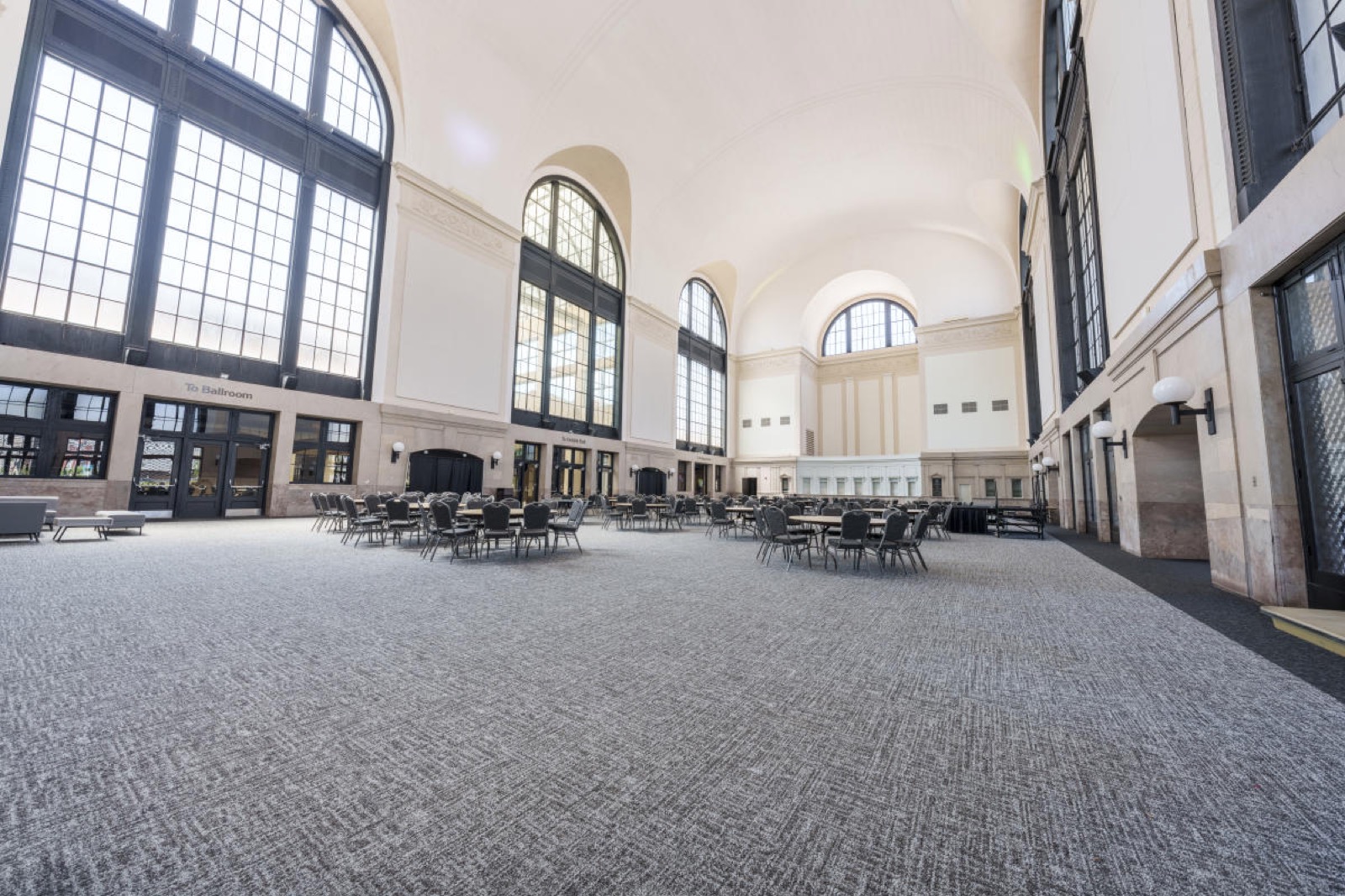
Crowne Plaza Jacksonville Airport/I-95N should be read as an airport-side meeting hotel where timing, shuttles, and overnight logistics matter more than atmosphere.
The airport/i-95n publishes 14,000 square feet of meeting space, 17 meeting rooms, and 317 guest rooms, which gives planners a useful read on the room scale before labor, hospitality, or exhibit scope is finalized. The room works when the event needs a reliable fly-in base and a schedule that can absorb arrivals without friction for the airport/i-95n.
This section should feel like an operations note, not a hospitality brochure for the airport/i-95n.
Crowne Plaza Jacksonville Airport/I-95N access notes
- Should be judged on arrival speed, airport access, and how cleanly the hotel supports overnight turnover.
- Start with flight timing, baggage flow, and the amount of movement the event expects from the lobby to the meeting room for Crowne Plaza Jacksonville Airport/I-95N.
- Use this property when the program needs a practical airport base instead of district atmosphere for Crowne Plaza Jacksonville Airport/I-95N.
- The listing data reports 14,000 square feet of meeting space for Crowne Plaza Jacksonville Airport/I-95N.
About Crowne Plaza Jacksonville Airport/I-95N
Located at 14670 Duval Road, Northside / Airport.
Running a project here means working against the venue's own exhibitor manual, dock windows, and service-order deadlines. Those details are confirmed before any build commits to fabrication.
The Jacksonville event landscape
Jacksonville is a working trade show market.
the Prime F.
What makes our work different
Local fabrication means real-time problem-solving. A graphic that needs to be reprinted at 6 a.m.
Clients who run repeat programs across multiple dates end up paying less per event when the same team handles everything. Less re-briefing, less re-training, less re-checking — the operational overhead drops year over year.
Operational rules on the Jacksonville floor
Practically, that means pulling the current exhibitor manual for every show and confirming a handful of items in writing: which tasks the venue's house crews cover, which tasks the show's general contractor covers, and what an exhibitor or their appointed contractor can handle without escalation.
Jacksonville should be treated as a mixed/open-market labor environment with venue-specific, organizer-specific, and scope-specific exceptions. Prime Osborn clearly publishes some house and union technical constraints, while many hotels and off-site venues rely on venue coordination and outside supplier networks without publishing one universal labor model for the whole city.
What's included in the project scope
For programs that repeat, asset management becomes part of the engagement — storage, graphic rotation, refurbishment, and re-crating are planned rather than one-off.
Scope boundary is as important as scope inclusion.
What an engagement actually looks like
Once scope is clear, the venue work begins.
One named show-site lead runs the install.
That document drives the next booking.
Pricing and scheduling
Cost scales with how it is built, how big it is, what the venue charges for its own services, what the graphics look like, how far the crates travel, and how many days the team stays on-site.
Rental programs run on 8 to 12.
What a successful project looks like
Trade show ROI is measured at the lead and pipeline level.
The post-show debrief is where the numbers get connected back to the physical booth. Which demo station drew traffic, which meeting area closed more conversations, which graphic zone attracted dwell time — that feedback shapes the next build rather than getting lost.
FAQ
How does labor work in Jacksonville?
It runs venue by venue.
How much lead time is ideal?
Custom builds run best with 16 to 20 weeks of lead time. Rentals take 8 to 12 weeks.
What information kicks off a project?
The show, the venue, the booth number, the dates, and a target budget range. From those, an initial scope and a realistic cost come back within a few days.
Who runs the booth on-site?
One named show-site lead runs the install, the show hours, and the strike. That person carries the floor plan and the punch list from crates to doors and reports up once a day.
Can the booth travel to the next city on our calendar?
Same structure, swappable graphics, standard crates.
What happens if something breaks during show hours?
The on-site lead handles it.