
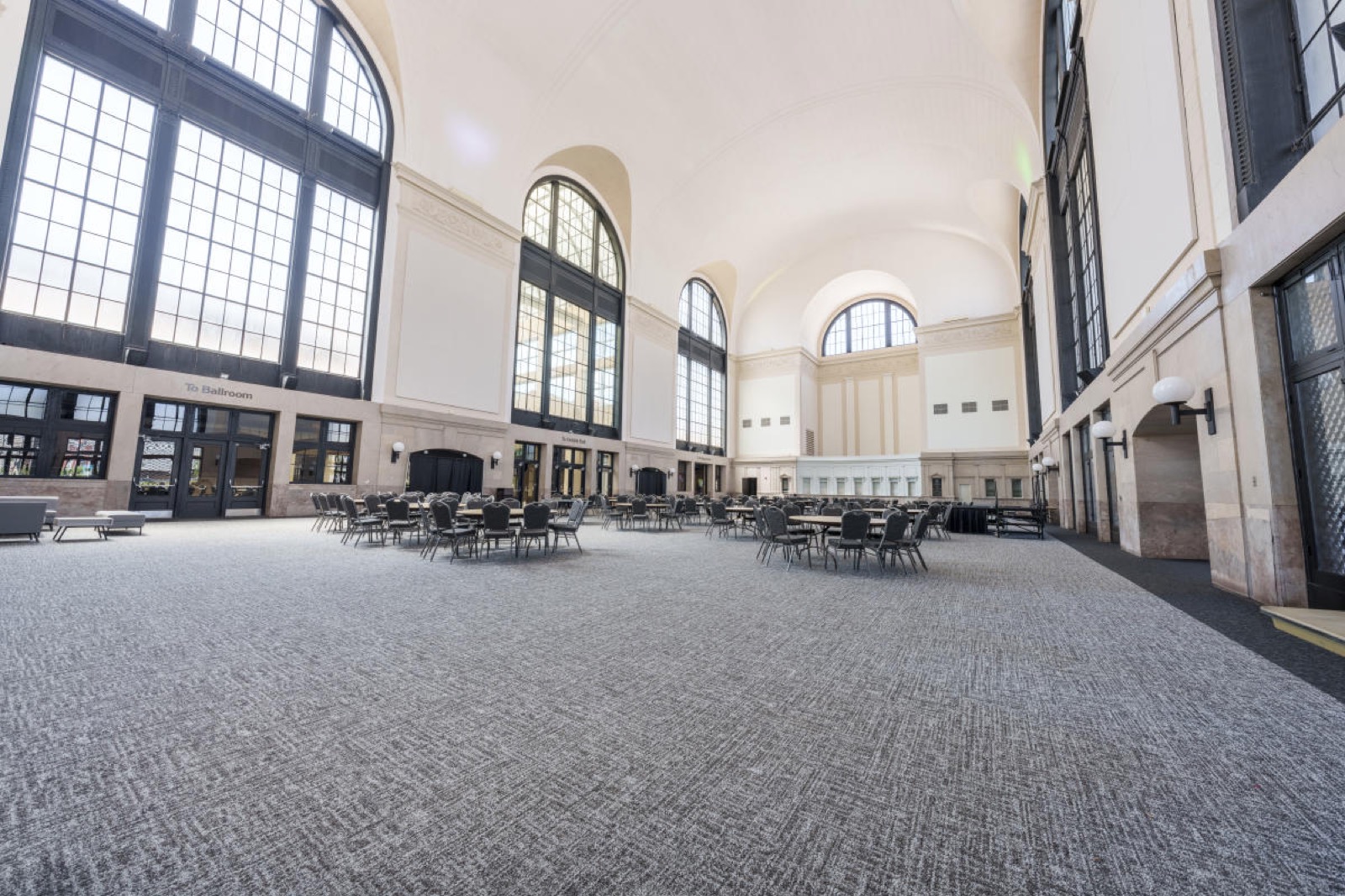
Jacksonville Equestrian Center should be read as an open-air, field-oriented special-event venue where movement, access, and the feel of the grounds matter more than hotel-style operations.
The center is part of Jacksonville's Westside / Cecil Commerce event mix and should be planned around the real room configuration, access pattern, and show manual in play for the date. The property works when the event wants a more spacious, practical setup with room for reception flow, sponsor use, or product moments that benefit from a less contained environment for the center.
This section should sound like a field-venue brief, not a generic special-event note for Jacksonville Equestrian Center.
Jacksonville Equestrian Center access notes
- Should be judged on access, open space, and whether the event really benefits from a more flexible grounds-based setting.
- Start with how the audience gets in, how the space spreads out, and whether the event needs a more outdoor-feeling plan for Jacksonville Equestrian Center.
- Use this property when the concept needs room to breathe instead of a polished indoor envelope for Jacksonville Equestrian Center.
About Jacksonville Equestrian Center
Jacksonville Equestrian Center is one of the venues we work on regularly in Jacksonville.
Located at 13611 Normandy Blvd., Westside / Cecil Commerce.
On any the center project, the first step is pulling the current exhibitor manual and confirming the service-order deadlines, dock windows, and any rigging approval path. Design decisions come after those are locked.
What drives the Jacksonville calendar
Jacksonville is a working trade show market.
Trade show weeks in Jacksonville compress decisions.
Operational rules on the Jacksonville floor
The workable version of Jacksonville labor planning is boring on purpose: read the manual, match the scope to its categories, order what the venue sells directly, and schedule everything else around its posted windows. Surprises almost always trace back to a step someone skipped.
Jacksonville should be treated as a mixed/open-market labor environment with venue-specific, organizer-specific, and scope-specific exceptions. Prime Osborn clearly publishes some house and union technical constraints, while many hotels and off-site venues rely on venue coordination and outside supplier networks without publishing one universal labor model for the whole city.
Scope at Jacksonville Equestrian Center
a bad one has many, because they weren't.
Out of scope by default are show organizer fees, booth lease costs paid directly to the show, staff travel and per diems, and any custom software or data-capture tooling the client runs on its own stack. Those stay on the client side and plug into the project through coordination, not rebilling.
What an engagement actually looks like
After the brief, the work turns to the building itself.
Install days are owned by a single on-site lead.
Throughout show hours, the on-site lead stays present.
Strike and closeout happen the same day.
What it costs and how fast it moves
Every project has the same cost drivers.
Lead time drives everything. Custom: 16 to 20 weeks. Rental: 8 to 12.
What a successful project looks like
Most programs in Jacksonville are evaluated on lead-capture volume, meetings booked on the floor, and qualified-pipeline attribution after the show. The booth is a means to those numbers — it is not the number itself.
A week after the show, the booth's actual floor performance is already clearer than any pre-show projection. We document those observations alongside the technical closeout so the next cycle inherits real signal, not nostalgia.
How we're built to run your project
Trade Show Services of Jacksonville keeps the work local.
Consistency across show dates is the other reason to hire local. The same crew that built the booth runs the install, knows the pack-out, and catches the small things — a missing hardware pack, a graphic edge that needs reseating, a storage crate routed to the wrong bay — without needing the client team to intervene.
FAQ
How does labor work in Jacksonville?
It runs venue by venue.
How much lead time is ideal?
Custom builds run best with 16 to 20 weeks of lead time. Rentals take 8 to 12 weeks.
What information kicks off a project?
The show, the venue, the booth number, the dates, and a target budget range. From those, an initial scope and a realistic cost come back within a few days.
Who runs the booth on-site?
One named show-site lead runs the install, the show hours, and the strike. That person carries the floor plan and the punch list from crates to doors and reports up once a day.
Can the booth travel to the next city on our calendar?
Same structure, swappable graphics, standard crates.
What happens if something breaks during show hours?
The on-site lead handles it.